The Cabinet
What exactly is the Cabinet, anyway?
The Cabinet includes the heads of 15 executive departments — the Secretaries of Agriculture, Commerce, Defense, Education, Energy, Health and Human Services, Homeland Security, Housing and Urban Development, Interior, Labor, State, Transportation, Treasury, and Veterans Affairs, as well as the Attorney General. It is the duty of these cabinet members to advise the President on subjects relating to their duties and office.
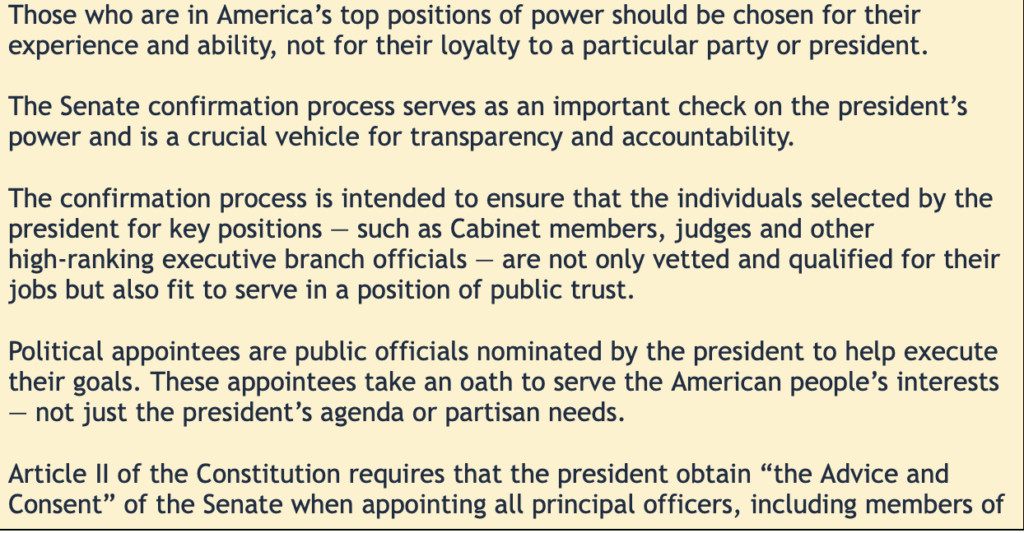
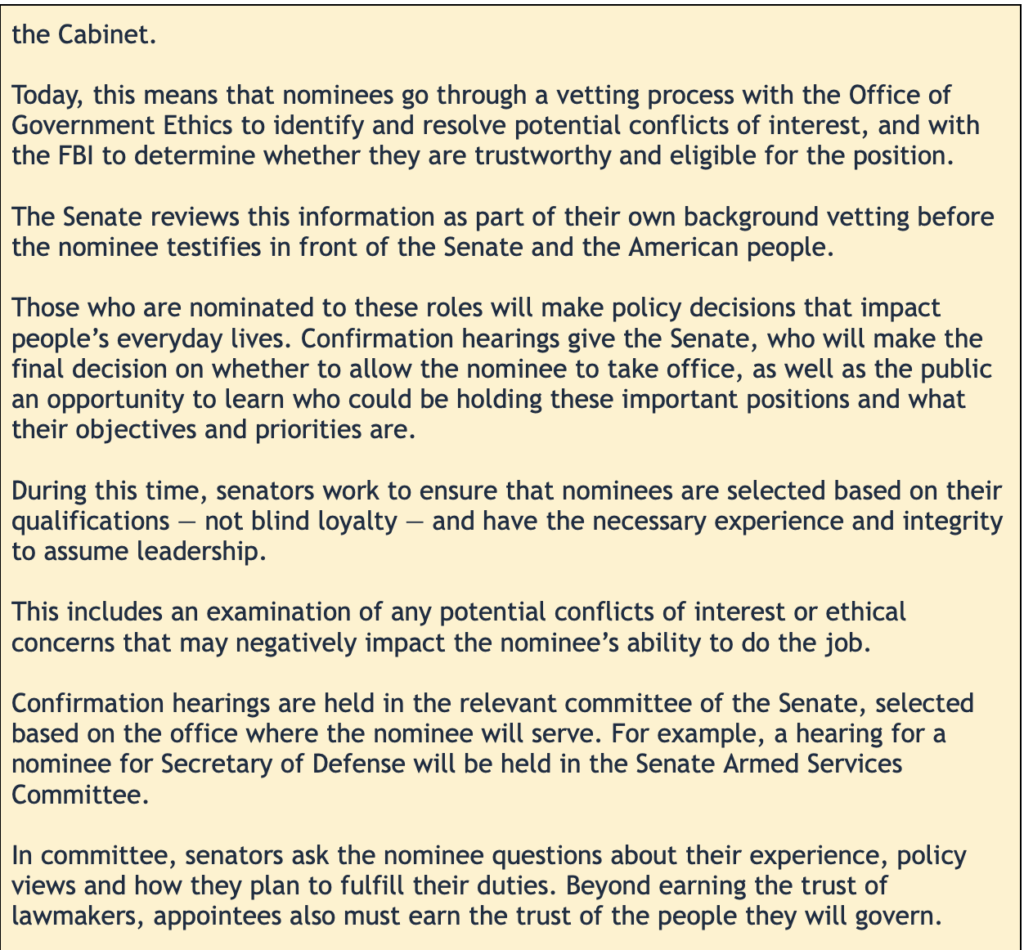
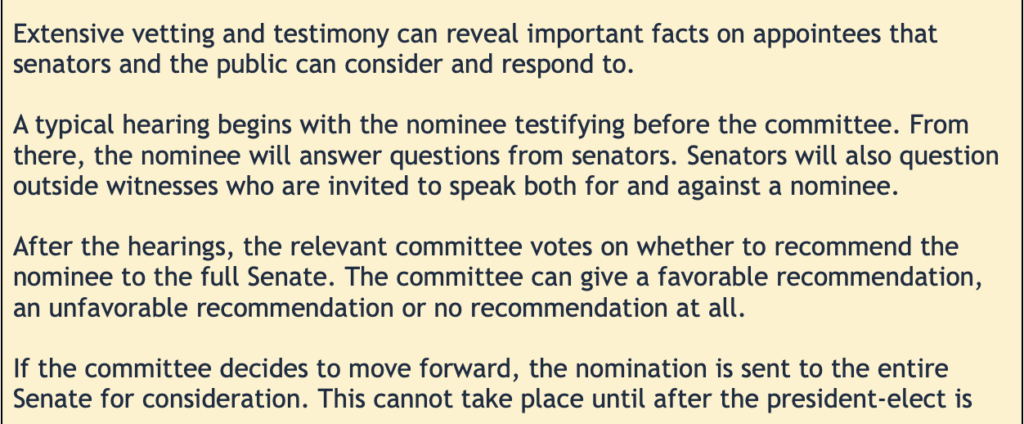
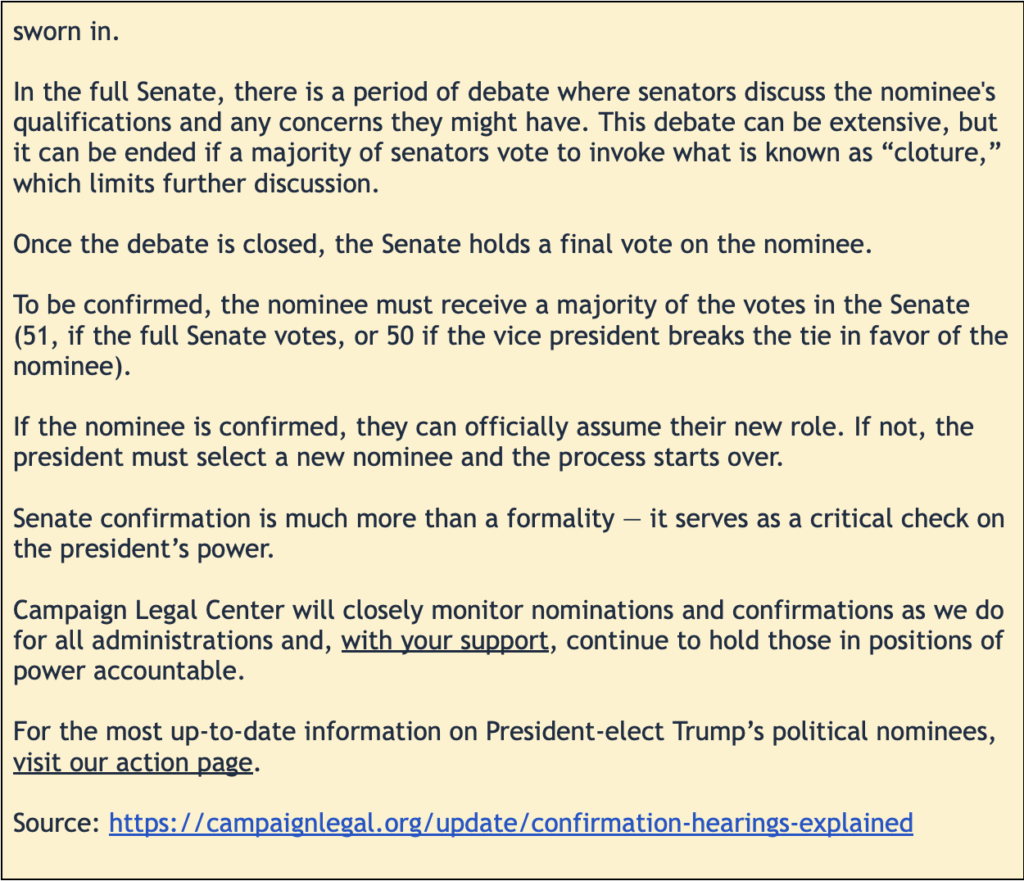
Cabinet members are appointed, or assigned, by the President. However, technically, the President appointments start as nominees – to be officially appointed, Presidential Cabinet appointees must be voted in, or confirmed, by a simple majority in the Senate. If the Senate does not vote them in, the President must pick a new appointee and start the process over. This is another “check” that ensures that the President is not simply making appointees based on personal preference or self-serving interests.
Please take five minutes to read this article, which goes into detail about the process and importance of confirmation hearings.

If you have the time, also take a moment to explore the websites of the executive departments of the Cabinet, or to read up on the current Presidential nominations for the Cabinet.